
Caribbean Wildlife Encounters: Birds, Fish, Reptiles, Amphibians, & Mammals of the Virgin Islands
One of the greatest joys of a Caribbean yacht charter is how close you get to the region’s incredible natural world. As you sail through turquoise waters, snorkel protected reefs, and explore secluded cays, the Caribbean’s wildlife reveals itself (sometimes in surprising ways).
Aboard Barefoot Cowboy, our crew and guests have the perfect vantage point: calm seas, quiet anchorages, and endless opportunities to witness the birds, fish, reptiles, and underwater creatures that call the islands home. Over the years, we’ve seen many of these incredible species first-hand, and our guests have seen even more!
Planning a trip to the U.S., British, or Spanish Virgin Islands? Here’s a guide to some of the fascinating wildlife you may encounter on your adventure.

Stunning Feathers: Birds of the Caribbean
The Caribbean is a birdwatcher’s paradise, with coastal cliffs, mangroves, and calm bays providing habitats for dozens of species. Whether you’re sailing past rocky outcroppings or anchored in quiet coves, keep an eye on the skies.
Species You’re Likely to See:
Magnificent Frigatebirds: With massive wingspans and forked tails, these aerial acrobats ride warm air currents effortlessly. Look for males with their bright red throat pouches.
Brown Pelicans: Possibly the most iconic bird of the islands, pelicans can be seen gliding low over the water before diving headfirst to catch fish.
Tropicbirds: Graceful and elegant, these white seabirds have long ribbon-like tails and often nest along rocky cliffs.
Egrets & Herons: You’ll spot them wading through shallow waters, hunting for small fish and crustaceans.
Brown & Red-Footed Boobies: Known for their curious expressions and strong diving skills, these silly-named seabirds are widespread across the tropical oceans.

Underwater Wonders: Fish, Mammals & Invertebrates
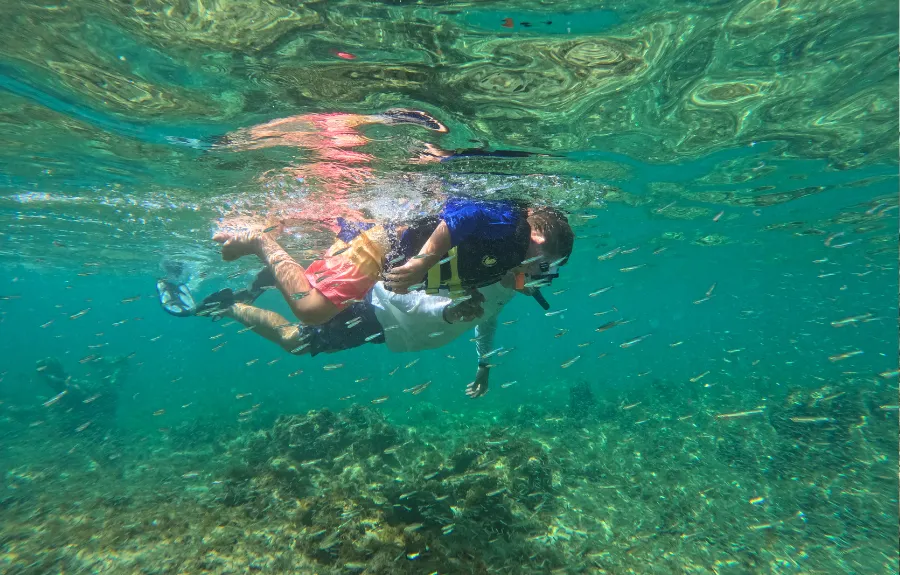
Snorkeling the Virgin Islands is like entering a completely different world: colorful, calm, and full of life. With its protected marine parks and thriving ecosystems, the region is one of the best snorkeling destinations in the world.
Below are some of the vibrant fish, and additional mammals and invertebrates you may encounter beneath the surface.
Colorful Reef Fish
You’ll find endless varieties of fish, but here are some of the most common:
Parrotfish: These brightly colored fish are essential for reef health.
Blue Tangs: You’ll recognize this electric-blue schooling fish as “Dory” from Finding Nemo.
Sergeant Majors: These small, bold, and curious striped fish are a species of damselfish that can grow to as large as 9 inches.
Angelfish & Butterflyfish: Always a favorite, these graceful swimmers have stunning color patterns.
Yellowtail Snapper: Snapper are often seen cruising in schools over coral formations.
Sharks & Rays
Don’t worry: Caribbean sharks and rays are gentle, and almost all are entirely uninterested in humans. They’re beautiful to watch from a respectful distance.
Nurse Sharks: These shy, docile bottom dwellers often nap under ledges.
Reef Sharks: You’ll spot these sleek and graceful sharks occasionally in deeper waters.
Southern Stingrays & Spotted Eagle Rays: These effortless gliders “fly” through the water, sometimes with fish companions.
Marine Mammals
You may spot these playful creatures during snorkeling sessions or while cruising between islands.
Dolphins: Common bottle-nosed dolphins, Atlantic spotted dolphins, spinner dolphins, and more often ride the bow wave of Barefoot Cowboy or appear in sheltered bays.
West Indian Manatees: Found in coastal waters and wetlands, these floating herbivores are endangered and a rare sight.
Whales: If you travel at the right time, you might spot the fins of humpback or grey whales as they breach the surface in deeper waters.
Invertebrates
The reefs and seagrass beds host an amazing array of small but captivating species:
Octopus: Considering these animals are masters of disguise, look for sudden color changes or movement near rocks while snorkeling.
Spiny Lobsters: You can usually spot these peeking out from crevices with long antennae.
Sea Stars: These bright orange or mottled varieties rest on sandy bottoms.
Sea Urchins & Feather Duster Worms: These key reef dwellers have delicate, mesmerizing shapes. Be careful not to touch!

Scales & Shells: Reptiles and Amphibians of the Islands
Reptiles thrive in the warm, sunny Caribbean climate. From rocky shorelines to mangroves and sandy beaches, you’ll find a variety of fascinating species.
Common Reptile Sightings
Sea Turtles: A favorite among guests, green, hawksbill, and loggerhead sea turtles can be commonly spotted while snorkeling.
Iguanas: These large, prehistoric-looking lizards are often seen sunbathing on docks or branches.
Anoles & Geckos: Small, quick, and often brightly colored, these friendly lizards can be found around beaches, docks, and hiking trails.
Island Ground Lizards: Keep an eye out for these tiny, endangered species found on certain cays during island excursions.
While reptiles often steal the spotlight, the Caribbean is also home to several fascinating amphibians, small but significant contributors to the islands’ ecosystems.
Amphibians You May Encounter
Coquí Frogs (Spanish Virgin Islands): Among the most iconic amphibians in the region, the coquí is famous for its distinctive nighttime call. These tiny tree frogs are especially associated with Puerto Rico and Vieques, where their melodic “ko-KEE” sound fills the warm evening air.
Caribbean Tree Frogs: Found in damp, shaded areas near forests and freshwater pools, they play a vital role in insect control despite their small size.
Marine Toads (Cane Toads): A larger amphibian commonly seen around gardens, roadsides, and coastal vegetation, marine toads usually emerge at dusk.
Amphibians tend to be more active in the evenings or after rainfall, making them a fun discovery for guests who enjoy nighttime deck lounging or exploring island trails during twilight hours.

Not-So-Creepy Crawlies: Insects of the Caribbean
While many travelers focus on the Caribbean’s birds, sea life, and reptiles, the region’s insects offer their own unique beauty and ecological importance. From vibrant flashes of color along the trail to delicate pollinators around flowering trees, insects help keep the islands’ ecosystems thriving.
Insects You May Spot on Your Adventure
Butterflies: The Caribbean is home to a wide variety of butterflies, including the Zebra Longwing, Gulf Fritillary, and Cloudless Sulphur.
Dragonflies & Damselflies: Often seen hovering above calm water or mangroves, these shimmering insects help naturally control mosquito populations.
Beetles: Tropical beetles come in all shapes and colors—some metallic, some patterned, and some surprisingly large. Look for them in forested areas.
Honeybees & Native Bees: These essential pollinators keep the islands' flowers, fruit trees, and coastal vegetation flourishing.
Moths: From tiny night fliers to larger species like the Black Witch Moth, these insects are often seen near deck lights in the evening or during calm moonlit nights at anchor.

Unexpectedly Furry: Mammals of the Virgin Islands
While the Caribbean is best known for its tropical birds, sea life, and reptiles, many visitors are surprised to encounter several land mammals roaming freely across the British, U.S., and Spanish Virgin Islands.
These animals were introduced over the past centuries—some intentionally, some accidentally—and have since made the islands their permanent home. Their presence adds a unique charm, especially when spotted during hikes, beach visits, or shore excursions.
Goats
Goats are among the most commonly seen mammals on the islands, particularly in the BVI. They wander rocky hillsides, graze along coastlines, and can even be spotted lounging near beaches. Many roam freely, giving parts of the islands a rustic, pastoral feel. Their agility on steep terrain is fascinating to watch.
Wild Horses (Vieques & Other Spanish Virgin Islands)
One of the most enchanting sights in the Spanish Virgin Islands—especially on Vieques—is the presence of free-roaming wild horses. These horses, descendants from domesticated animals brought by early settlers, graze peacefully in open fields, wander down quiet roads, or canter along beaches at sunset. Seeing them in the wild is a highlight for many travelers.
Small Indian Mongoose
Introduced in the 1800s to control rat populations on plantations, the small Indian mongoose can now be found on several islands throughout the Caribbean, including parts of the Virgin Islands. These quick, slender mammals are often spotted darting across paths or exploring brushy areas. Though not native, they’ve become a notable part of the islands’ ecological tapestry.
Feral Cats & Chickens (Honorable Mentions)
Though not the focus of this section, guests often ask about the many free-roaming cats and chickens across island towns and marinas. Like goats and horses, these animals have long histories on the islands and contribute to their character and charm.

Experience Wildlife Up Close with Barefoot Cowboy
Exploring the Caribbean isn’t just about turquoise waters and white-sand beaches. It’s about the vibrant, living world that surrounds you. From soaring seabirds to colorful reef fish and sun-loving reptiles, every day brings a new wildlife encounter.
Barefoot Cowboy brings you up close and personal with some of these incredible species. When you sail with Barefoot Cowboy, you get:
Access to secluded wildlife-rich bays
Expert recommendations on the best snorkeling spots
A quiet, eco-friendly vessel ideal for viewing wildlife
Freedom to explore at your own pace
The wildlife of the BVI, USVI, and Spanish Virgin Islands is waiting to be discovered. Book your private yacht charter with Barefoot Cowboy and experience the magic of the Caribbean, above and below the water.